
The Growing Musculoskeletal Health Crisis in WA - and How We Can Reduce Its Impact
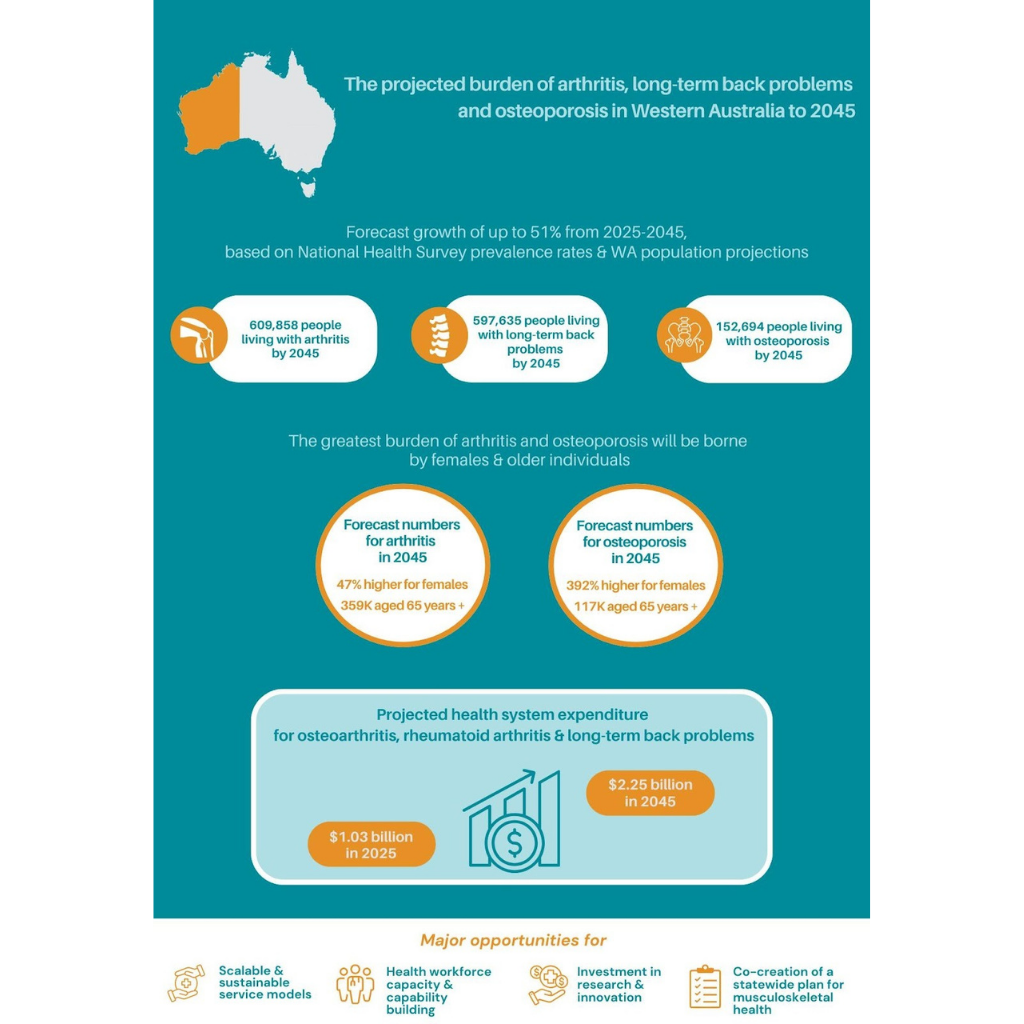
Recently, members of our wider physiotherapy community attended the launch of a report from Monash and Curtin Universities forecasting the burden of musculoskeletal conditions in Western Australia over the next 20 years. The infographic below summarises key findings from the Arthritis and Osteoporosis Foundation of WA.
The Takeaway: A Musculoskeletal Health Crisis in WA
At a glance: far more people will be living with arthritis, osteoporosis and long-term back problems in WA over the coming decades.
It’s a confronting picture – and one that highlights why we need to start preparing now. Hearing directly from researchers, clinicians and people living with these conditions reinforced just how important it is to address this challenge early, at both a community and individual level.
Why This Matters to the Spearwood Community
Conditions affecting our bones and joints are already incredibly common. Most people reading this will know someone – a family member, friend or neighbour – who is impacted daily by arthritis, osteoporosis or persistent back pain. You may even be managing one of these conditions yourself.
What’s concerning is that the numbers are only expected to rise, particularly among women. Arthritis is projected to affect women 47% more than men, while osteoporosis is expected to impact women at a staggering 392% higher rate.
This is why the data points to a growing musculoskeletal health crisis in WA, one that will increasingly affect local communities like Spearwood.
The Cost Goes Beyond the Health System
The projected health expenditure associated with musculoskeletal conditions in Western Australia is estimated at $2.25 billion. This figure doesn’t include the significant out-of-pocket costs many people face for appointments, imaging and ongoing care.
People living with these conditions often:
- See multiple health professionals
- Experience lengthy wait times for specialist care
- Manage ongoing appointments alongside work and family commitments
It’s hoped that reports like this will prompt meaningful changes to our health system, including better access to care, more resources for prevention, and continued research into effective treatments.
Prevention Plays a Bigger Role Than Many Realise
One of the most encouraging messages from the report is that a large portion of the burden associated with musculoskeletal conditions can be reduced through good quality preventative care.
While it may sound simple, the evidence is strong:
- Regular, appropriate exercise
- A nutritious diet
- Healthy sleep habits
- Avoiding smoking
All significantly reduce the risk of developing musculoskeletal problems in the first place.
Managing Musculoskeletal Conditions Without Overmedicalising
There is also a great deal that can be done to manage musculoskeletal conditions effectively after diagnosis – often without needing more scans, invasive procedures or hospital visits.
Physiotherapists are musculoskeletal experts who can provide guidance, treatment and practical strategies to help people self-manage long-term conditions.
Physiotherapy can help by:
- Providing exercise programs that reduce pain and improve function in osteoarthritis, potentially delaying or avoiding joint replacement surgery
- Safely prescribing exercise to improve bone density for people with osteoporosis
- Treating lower back pain and teaching evidence-based strategies to reduce flare-ups and prevent recurrence
Supporting Long-Term Musculoskeletal Health in Our Community
Yes – the numbers are big, and the challenges ahead are real. But the good news is there is a lot we can do, both as individuals and as a community.
Simple, everyday habits that keep our bodies strong and moving well can significantly ease the future burden of this musculoskeletal health crisis in WA. And when pain or injury does arise, there is already excellent support available.
Physiotherapists are here to help people understand what’s happening in their bodies, manage pain with confidence, build strength and keep doing the things they love. By paying attention to musculoskeletal health now, we can make a real difference – for our health system, our local community, and our quality of life in the years ahead.
Get ahead of the curve – book an assessment with one of our Physiotherapists to discuss how you can be proactive for your future health.